Distinct Gut Microbiome Signatures in Ethnically Diverse Populations within a Shared Urban Asian Geography
Abstract
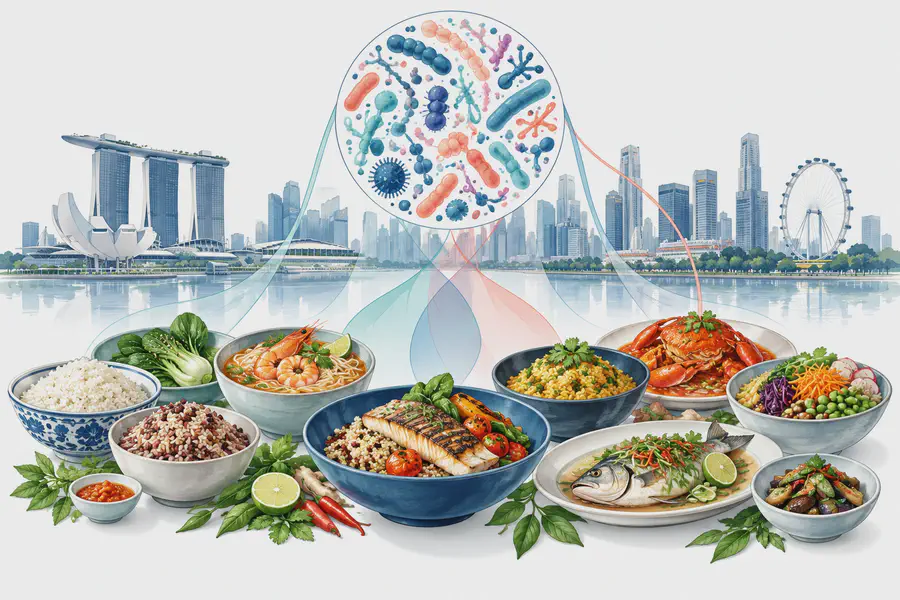
The gut microbiome composition varies across human populations, but its characteristics and determinants in a multi-ethnic setting remain incompletely understood. Singapore, a multicultural city-state, provides a context in which culturally diverse groups share a broadly similar built environment. Using the Health for Life in Singapore (HELIOS) cohort, we profiled the gut microbiome of ethnic Chinese, Indian, and Malay participants (n=861) who resided in the country. Despite substantial overlap in the overall microbial compositions, each group displayed distinct microbial signatures that paralleled culturally rooted dietary habits. Specifically, ethnic Indian participants showed enrichment of multiple Bifidobacterium species associated with greater intake of traditional grain-based staples such as idli and thosai; ethnic Malay participants exhibited higher abundance of Ruminococcaceae associated with coconut-and rice-based dishes; and ethnic Chinese participants had greater levels of Bacteroides associated with seafood- and meat-rich diets. These ethnicity-diet-microbiome relationships were further corroborated by additional data from two independent Malaysian cohorts (n=544), a cohort from the United States (n=210), and an in vitro microbial culture model showing selective Bifidobacterium expansion by a fermented rice-based batter. Analysis of fecal microbiome-based risk scores revealed ethnic gradients in colorectal neoplasia scores that mirrored population-level cancer incidence patterns. Together, these findings characterize gut microbiome variations across major Asian ethnicities residing in a shared urban environment, providing a reference for precision health strategies relevant to over two billion ethnically relevant people in the Asia-Pacific region and beyond.
Type
Publication
medRxiv